
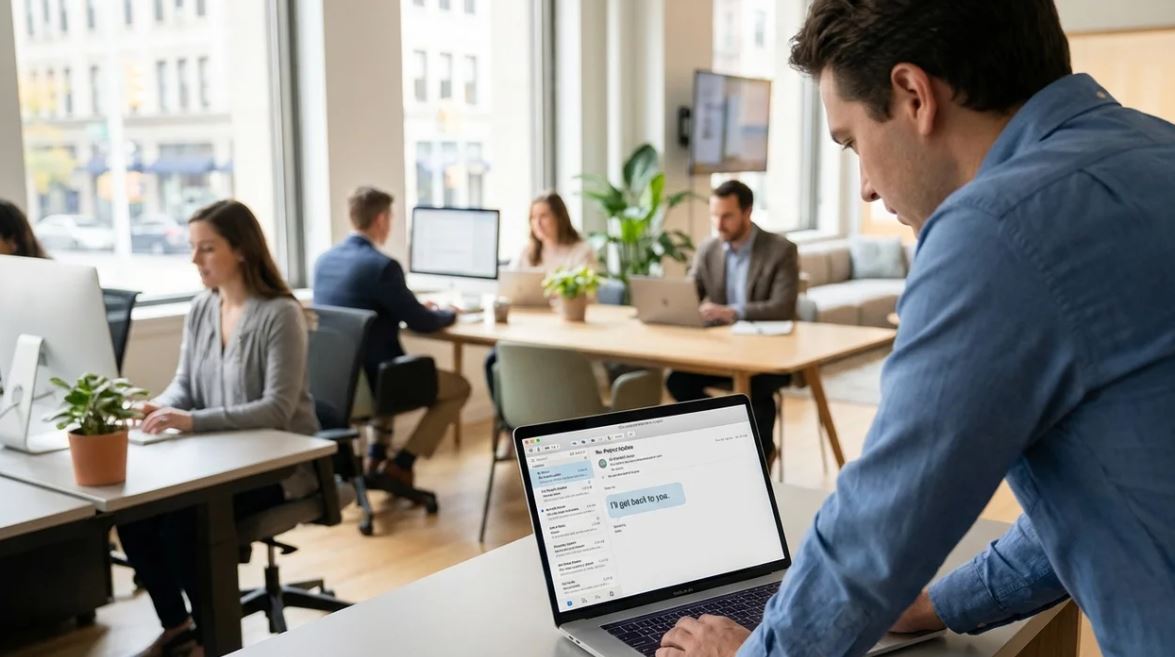
If you work in an American company, there’s a phrase you’ll hear constantly in meetings, emails, and messages: “I’ll get back to you.”
It’s one of the most common expressions used in professional communication. Yet for many non-native English speakers, the meaning and tone can sometimes feel unclear.
Does it mean the person doesn’t want to answer?
Are they avoiding the question?
Or does it simply mean they need more time?
In most cases, the meaning is straightforward.
“I’ll get back to you” means the person doesn’t have the answer right now but will respond later after checking the information.
It’s a normal and professional way to manage communication when immediate answers aren’t available.
Let’s look at what this phrase really means, when professionals use it, and how you can use it effectively in your own workplace communication.
What Does “I’ll Get Back to You” Mean?
In Business English, “I’ll get back to you” means:
“I will respond later once I have the information.”
Instead of giving an incomplete or uncertain answer, professionals often take time to verify details first.
They may need to:
-
Check data or reports
-
Confirm information with another department
-
Review a document carefully
-
Speak with a client or manager
-
Think through the request
Rather than guessing, they say:
“I’ll get back to you.”
This shows responsibility and professionalism.
Why This Phrase Is Important in Business Communication
In professional environments, accuracy matters.
Giving incorrect information can cause confusion, delays, or even financial problems. Because of this, professionals often avoid answering questions immediately if they are not completely sure.
Instead, they promise to respond later after confirming the details.
Using “I’ll get back to you” helps maintain:
-
Accuracy
-
Professional credibility
-
Clear communication
It signals that the request is acknowledged and will be addressed soon.
Common Situations Where You’ll Hear This Phrase
Let’s look at a few situations where this expression is commonly used in the workplace.
1. During Meetings
Sometimes someone asks a question that requires additional research.
For example:
“That’s a good question. Let me check and I’ll get back to you.”
This response is professional because it shows you respect the question but want to confirm the correct information first.
2. When You Need to Confirm with Another Team
In many companies, decisions involve multiple departments.
Example:
“I need to check with finance. I’ll get back to you.”
Here, the person cannot provide an answer immediately because another team must confirm it.
3. When Reviewing Documents or Requests
Professionals often receive documents that require review before responding.
Example:
“Thanks for sending this. I’ll review it and get back to you.”
This communicates appreciation and sets the expectation that a reply will come later.
Real Workplace Examples
Here are a few more examples of how professionals use this phrase.
Example 1:
“I’ll get back to you once I confirm the numbers.”
Example 2:
“I’ll get back to you after I speak with the client.”
Example 3:
“I’ll get back to you later today.”
In each case, the message is clear: a response will come after verification.
Why Adding a Time Frame Is Professional
While “I’ll get back to you” is useful, professionals often make the phrase stronger by adding a specific time frame.
For example:
“I’ll get back to you this afternoon.”
or
“I’ll get back to you by tomorrow morning.”
This makes your communication more reliable.
When you include a timeline, the other person knows when to expect the answer.
It also shows strong professional habits such as:
-
Accountability
-
Organization
-
Respect for others’ time
What If You Don’t Know the Timeline?
Sometimes you don’t know exactly how long the process will take.
In that case, you can still provide a general estimate.
For example:
“I’ll check on this and get back to you soon.”
or
“Let me confirm the details and I’ll get back to you.”
Even without a precise deadline, the phrase still communicates responsibility.
Why Professionals Avoid Guessing Answers
A common mistake in workplace communication is answering questions too quickly.
If you guess or provide uncertain information, you might later need to correct yourself. This can create confusion or damage trust.
Using “I’ll get back to you” prevents this problem.
It allows you to:
-
Verify information
-
Think carefully
-
Provide accurate answers
This approach is widely respected in professional environments.
How to Respond When Someone Says “I’ll Get Back to You”
If someone uses this phrase with you, the best response is simply to acknowledge it.
For example:
“Sounds good, thank you.”
or
“Great, I appreciate it.”
In most situations, there is no need to push for an immediate answer.
Professional communication often requires patience while information is confirmed.
Key Takeaway
Let’s summarize the main idea.
“I’ll get back to you” means:
“I will respond later after checking the information.”
It’s one of the most common phrases used in American workplace communication.
The phrase helps professionals:
-
Avoid giving incorrect answers
-
Confirm details first
-
Provide accurate responses
When possible, adding a time frame makes the message even more professional.
For example:
-
“I’ll get back to you this afternoon.”
-
“I’ll get back to you by tomorrow morning.”
Want to Sound More Natural in American Business English?
Understanding phrases like “Per My Last Email” isn’t just about vocabulary — it’s about tone, timing, and cultural awareness.
If you want structured practice with real workplace scenarios, the ChatterFox Business English Program is designed specifically for non-native professionals working in U.S. environments.
The course includes:
-
Real American workplace phrases and how to use them naturally
-
Email and meeting communication practice
-
Tone correction and clarity training
-
AI speech recognition technology
-
Coaching support from certified accent and communication coaches
It’s built to help you speak clearly, confidently, and professionally — not just grammatically correctly.
Final Thoughts
Understanding phrases like “I’ll get back to you” helps you navigate real workplace communication more confidently.
These expressions are part of everyday professional language in American companies.
Once you recognize their meaning and tone, you’ll find them much easier to interpret—and to use yourself.
And mastering small phrases like this is an important step toward becoming fluent in real Business English communication at work.