

If you work in an American company—or communicate with clients in English—you’ll eventually see this phrase in emails: “At your earliest convenience.”
It sounds formal.
Maybe even a little old-fashioned.
And for many non-native professionals, it can be confusing.
Does it mean immediately?
Is it optional?
How urgent is it, really?
Let’s break it down clearly so you understand what it actually means, when to use it, and how it compares to other common workplace phrases.
What Does “At Your Earliest Convenience” Mean?
In Business English, “at your earliest convenience” means:
“Please do this as soon as you reasonably can.”
It’s a polite way to request action without sounding demanding.
But here’s the key idea:
It does not mean “right now.”
And it does not mean “whenever you want.”
It sits somewhere in the middle.
It communicates:
- This is important
- It should be done soon
- But the tone remains respectful and professional
Why This Phrase Is So Common in Emails
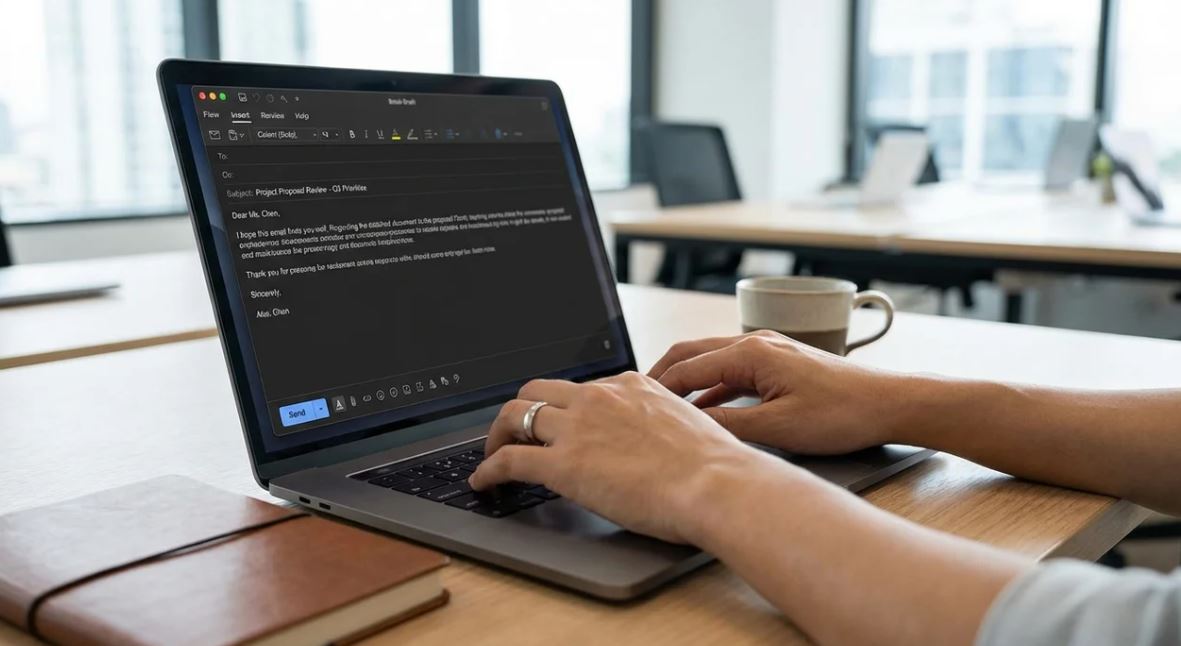
You’ll see this phrase mostly in formal emails, especially when someone wants to sound:
- Polite
- Professional
- Respectful
In American workplace communication, tone matters a lot.
Instead of writing:
“Send this soon.”
—which can feel too direct—
People often write:
“Please send this at your earliest convenience.”
Same message.
Better tone.
Common Situations Where It’s Used
Let’s look at where this phrase typically appears.
1. Requesting Document Review
One of the most common uses:
“Please review the document at your earliest convenience.”
This means the review is needed soon—but the sender is being polite about it.
2. Asking for Documents or Signatures
Example:
“Could you send the signed contract at your earliest convenience?”
This is especially common in client communication.
3. Requesting Availability
Example:
“Let me know your availability at your earliest convenience.”
Here, the sender wants a response soon—but without pressure.
4. Asking for Confirmation
Example:
“Please confirm receipt at your earliest convenience.”
This is often used in formal or external communication.
How It Compares to “ASAP”
Now let’s talk about something important.
Many learners ask:
Is this the same as ASAP?
The answer is: almost—but not exactly.
“ASAP”
- More direct
- Feels more urgent
- Common in internal communication
“At your earliest convenience”
- More formal
- More polite
- Often used with clients or external partners
You can think of it like this:
“At your earliest convenience” = the polite version of ASAP
But remember:
Even though it sounds softer…
it still carries urgency.
Important: Don’t Misinterpret the Tone
Because this phrase sounds polite, some people misunderstand it.
They think:
“Oh, this isn’t urgent.”
But that’s not true.
The message still means:
Please don’t delay too much.
The urgency is there—just expressed in a more respectful way.
How to Use It Professionally
You can absolutely use this phrase in your own communication.
It’s especially useful when:
- Writing formal emails
- Communicating with clients
- Requesting something politely
- Wanting to sound polished
Here are a few examples:
“I’d appreciate your feedback at your earliest convenience.”
“Please confirm the details at your earliest convenience.”
“Kindly review the attached file at your earliest convenience.”
All of these sound:
- Professional
- Respectful
- Clear
When NOT to Use It
Even though this phrase is useful, it’s not always the best choice.
Avoid using it when:
- You need immediate action
- The situation is urgent and time-sensitive
In those cases, it’s better to be more direct:
“Please review this today.”
“I need this within the next hour.”
Clarity is more important than politeness when timing is critical.
A Quick Professional Tip
If you want to be even clearer, you can combine this phrase with a timeframe.
For example:
“Please review the document at your earliest convenience, ideally by Friday.”
This gives:
- Politeness
- Clarity
- A clear expectation
That’s strong professional communication.
ChatterFox Business English Course Recommendation
If you want to sound more natural and confident in formal workplace communication, phrases like “at your earliest convenience” are just one piece of the puzzle.
The ChatterFox Business English Course helps you:
- Learn how to write professional emails
- Practice real workplace communication scenarios
- Improve your tone, clarity, and confidence
- Use English naturally in both formal and informal situations
It combines AI speech recognition technology with support from certified coaches, so you’re not just learning phrases—you’re learning how to use them effectively.
The Key Takeaway
Let’s simplify everything.
“At your earliest convenience” means:
“Please do this soon — in a polite, professional way.”
It’s commonly used in:
- Formal emails
- Client communication
- Professional requests
And while it sounds soft, it still carries real urgency.
Final Thoughts
Many Business English phrases aren’t just about meaning—they’re about tone.
And this phrase is a perfect example.
It allows you to:
- Be polite
- Be professional
- Still communicate urgency
Once you understand how it works, you’ll feel much more confident using it in real workplace situations.
And that’s how you move from simply knowing English…
to communicating like a professional.