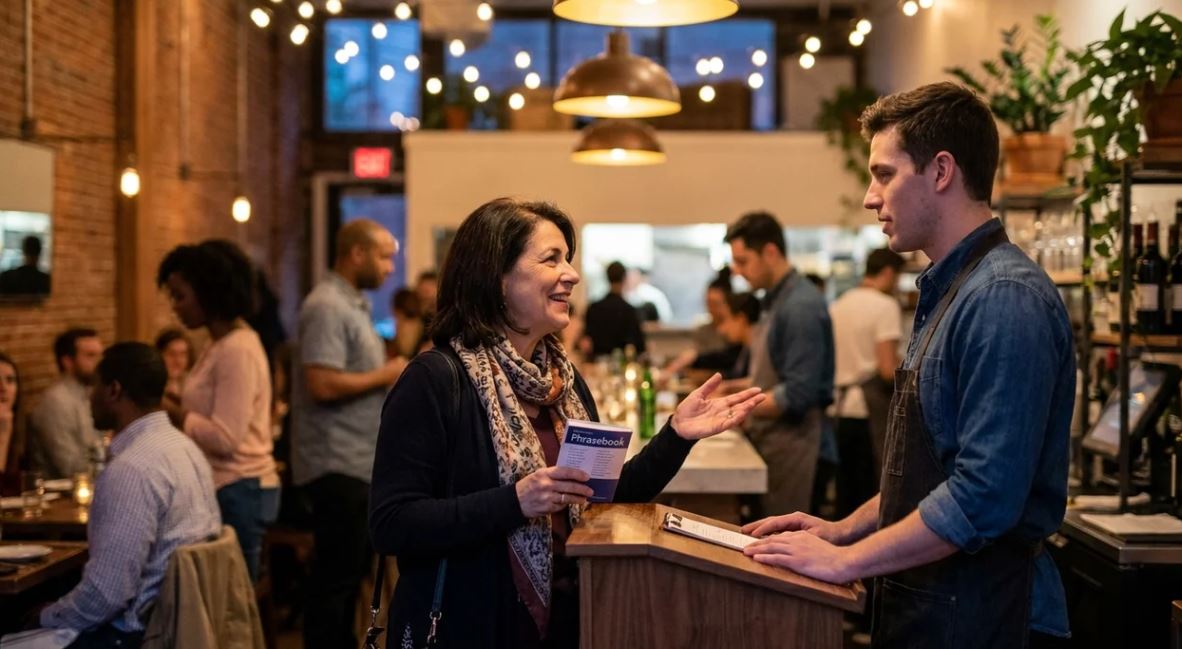
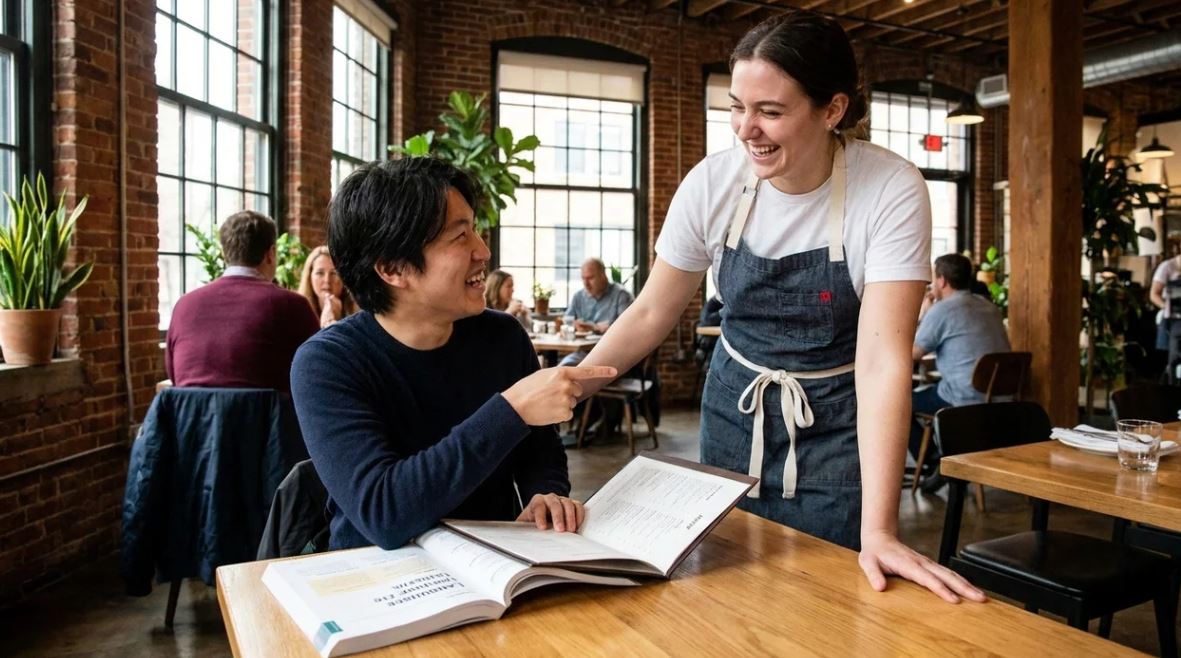
For many English learners, the menu is actually one of the most stressful parts of eating at a restaurant. There are new vocabulary words, unfamiliar dishes, cultural differences, and the pressure of making decisions quickly.
In this guide, you’ll learn how to order drinks, understand common menu sections, ask questions naturally, request substitutions, and communicate confidently with servers in American restaurants.
This guide is adapted from a lesson in the ChatterFox Speaking Course, where learners practice real-world restaurant conversations and build the speaking skills needed for everyday life in the United States.
Let’s dig in.
Why Restaurant Menus Feel So Confusing
Restaurant menus can be challenging even when your English is strong.
Why?
Because menus often contain:
- Food vocabulary you’ve never seen before
- Regional dishes
- Cultural references
- Ingredients you don’t recognize
- Cooking methods you may not know
On top of that, there’s usually a server waiting for your order.
That combination can create a lot of pressure.
The important thing to remember is this:
✨ You do not need to understand every word on the menu.
American restaurant servers answer questions all day long.
Asking for clarification is completely normal.
In fact, many native speakers do it regularly.
Ordering Drinks: The First Thing You’ll Usually Do
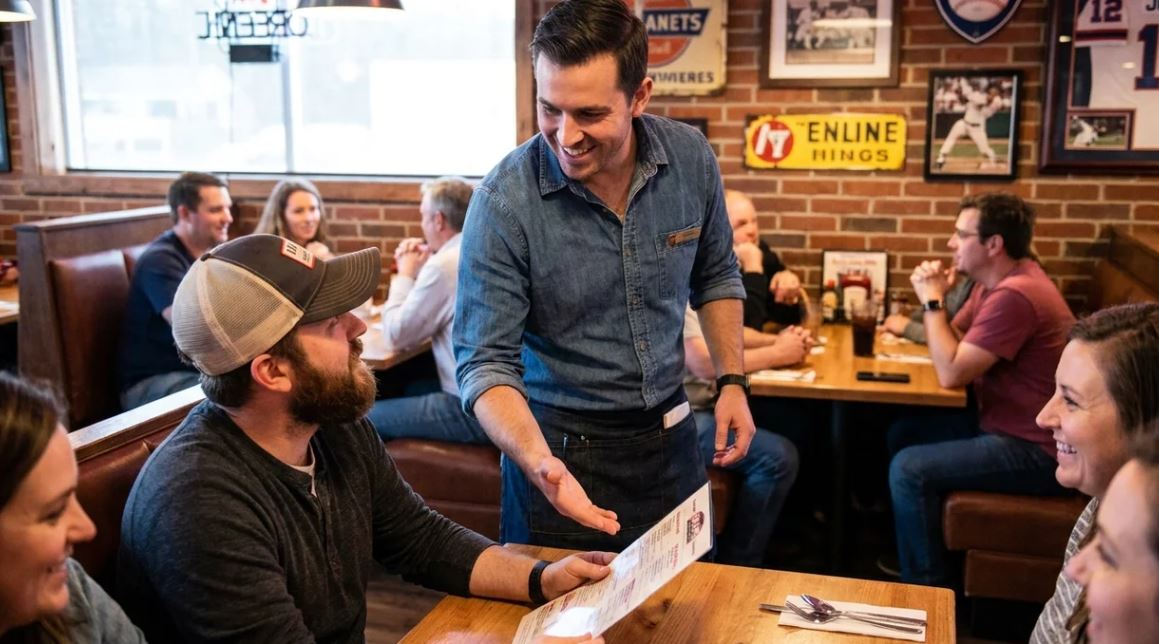
After you’re seated, the first thing that usually happens is the drink order.
A server may approach your table and say:
“Can I get you started with something to drink?”
At first, this phrase sounds complicated.
But it’s simply another way of asking:
“What would you like to drink?”
That’s all it means.
Common Ways to Order a Drink
Here are some of the most natural responses you’ll hear in American restaurants.
Water
✅ “Just water for now.”
✅ “Water is fine.”
✅ “Just water, thank you.”
Soft Drinks
✅ “I’ll have a Coke.”
✅ “Can I get a Sprite?”
✅ “I’ll take a Diet Coke.”
Tea and Coffee
✅ “Can I get an iced tea?”
✅ “I’ll have a coffee.”
✅ “Hot tea, please.”
Notice the phrase:
“Can I get…?”
This is one of the most common restaurant expressions in American English.
Many learners worry that it sounds too casual.
Don’t.
Native speakers use it constantly.
In restaurants, it’s completely normal.
Understanding Water Questions
If you order water, the server may ask:
“Still or sparkling?”
This confuses many visitors.
Here’s the difference:
Still Water = Regular water
✨ Sparkling Water = Carbonated water with bubbles
You can simply respond:
✅ “Still, please.”
✅ “Sparkling, please.”
What Does “Lemon With That?” Mean?
Another common question is:
“Lemon with that?”
The server is asking:
“Would you like a slice of lemon in your drink?”
You can answer:
✅ “Sure.”
✅ “Yes, please.”
✅ “No thanks.”
Simple and easy.
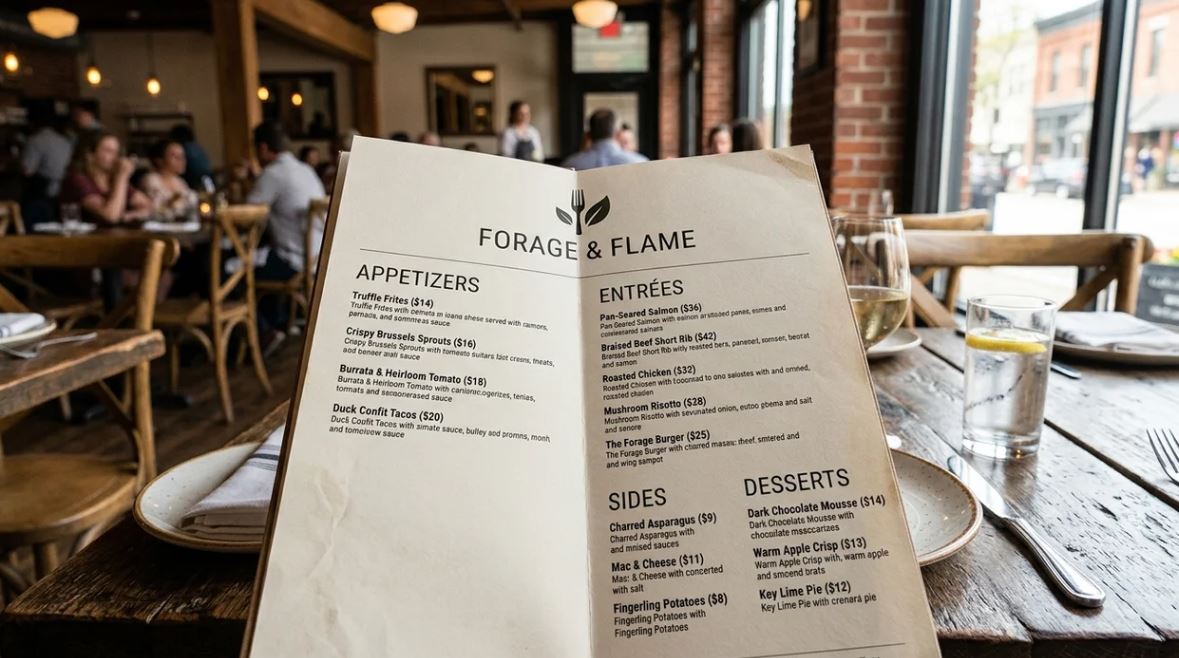
Understanding the Four Main Menu Sections
Most American restaurant menus are organized into four major categories:
- Appetizers
- Entrées
- Sides
- Desserts
Learning these categories makes reading menus much easier.
Let’s look at each one.
Appetizers: The Food Before the Meal
Appetizers are small dishes ordered before the main course.
Their purpose is to:
- Start the meal
- Share with friends
- Enjoy while waiting for entrées
Common appetizers include:
- Nachos
- Mozzarella sticks
- Chicken wings
- Calamari
- Spinach dip
Americans Often Say “Apps”
One important cultural note:
Americans frequently shorten appetizers to:
“Apps”
You might hear:
“Should we get some apps?”
“Let’s order a couple of apps for the table.”
“Do you want to share an app?”
These are extremely common expressions.
How to Order Appetizers
When ordering appetizers, people often use phrases like:
✅ “We’ll start with the mozzarella sticks.”
✅ “Can we get the nachos to share?”
✅ “Let’s get the spinach dip.”
The phrase “to share” is especially common when multiple people will eat the appetizer together.
The Most Confusing Menu Word: Entrée
One word surprises almost every English learner.
Entrée
In many countries, an entrée is a starter.
But in the United States:
An entrée is the main dish.
This difference causes confusion all the time.
If someone asks:
“What are you getting for your entrée?”
They are asking:
“What main meal are you ordering?”
Not:
“What appetizer are you ordering?”
Remembering this distinction can save a lot of confusion.
Natural Ways to Order Your Entrée
When it’s time to order your main meal, you’ll hear these phrases everywhere.
Most Common Phrases
✅ “I’ll have the grilled salmon.”
✅ “Can I get the cheeseburger?”
✅ “I’ll go with the steak.”
✅ “I’ll take the chicken pasta.”
All of these sound natural and native-like.
Understanding Side Dishes
Sides are additional foods served alongside your entrée.
Common side dishes include:
Fries
Mashed potatoes
Rice
Vegetables
Side salad
Some meals automatically include a side.
Other meals allow you to choose.
Questions You’ll Hear About Sides
The server may ask:
“What would you like for your side?”
or
“Would you like fries or a salad with that?”
This simply means:
Which side dish would you like?
Natural Ways to Choose a Side
Here are common responses:
✅ “I’ll do fries.”
✅ “I’ll take the side salad.”
✅ “I’ll do mashed potatoes.”
✅ “Rice, please.”
You’ll notice Americans often say:
“I’ll do…”
This is a casual and extremely common restaurant phrase.
Saving Room for Dessert
Desserts are sweet foods eaten after the main meal.
Common desserts include:
Cheesecake
Ice cream
Cookies
Pie
Brownies
Questions Servers Ask About Dessert
Toward the end of the meal, you may hear:
“Would you like to see the dessert menu?”
or
“Can I tempt you with dessert?”
The second one sounds funny, but it’s very common.
The server is simply asking:
“Would you like something sweet?”
Natural Ways to Order Dessert
You can respond with:
✅ “I’ll have the cheesecake.”
✅ “We’ll share the brownie.”
✅ “Can we get the chocolate cake?”
The phrase “We’ll share…” is especially common because desserts are often large enough for multiple people.
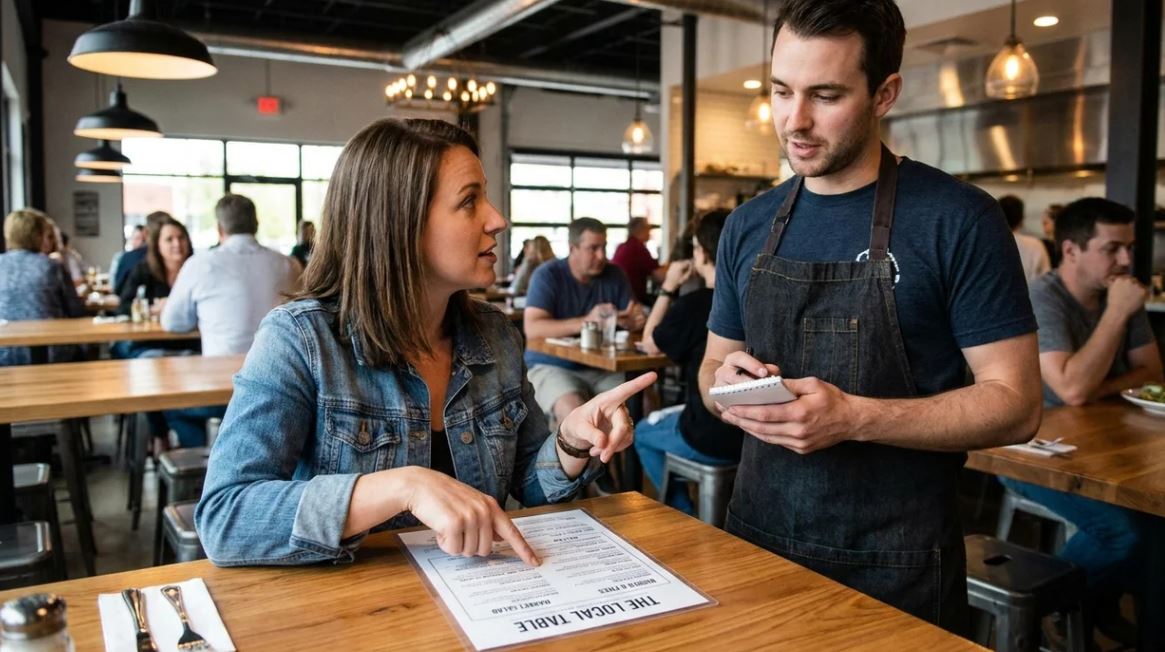
The Most Useful Question on Any Menu
If you only remember one question from this article, make it this one:
“What do you recommend?”
This simple question can save you from a lot of menu stress.
Servers answer it every day.
They’re used to it.
And they usually enjoy helping.
Another Great Question
You can also ask:
“What’s popular here?”
This is another excellent option.
The server will usually recommend:
- Best-selling dishes
- Customer favorites
- House specialties
- Personal favorites
These recommendations often lead to great meals.
Understanding American Restaurant Service
Many English learners notice a cultural difference when dining in the United States.
In some countries, servers only approach the table when customers call them over.
In America, it’s usually the opposite.
Servers often check on tables multiple times.
This is generally considered good service.
Questions Servers Ask During the Meal
You may hear:
“How’s everything?”
or
“Can I get you anything else?”
These questions aren’t complicated.
The server is simply checking whether you’re happy with your meal.
Easy Responses
You don’t need a long answer.
Try:
✅ “Everything’s great, thanks.”
✅ “We’re good for now.”
✅ “Everything’s delicious.”
✅ “No, thank you.”
That’s all you need.
The American Love of Food Customization
Here’s something important to know about restaurant culture in the United States:
Americans customize their food all the time.
Seriously.
People regularly:
- Remove ingredients
- Change side dishes
- Switch sauces
- Add toppings
- Request special preparation
So don’t worry about sounding difficult.
Most restaurants expect these requests.
Common Substitution Phrases
Changing a Side Dish
✅ “Can I get fries instead of salad?”
✅ “Can I substitute the rice for vegetables?”
Removing Ingredients
✅ “No onions, please.”
✅ “No tomatoes, please.”
✅ “Can I get that without cheese?”
Adding Something
✅ “Can I add avocado?”
✅ “Extra sauce, please.”
These requests are extremely common.
Understanding “On the Side”
A phrase you’ll hear often is:
“On the side”
For example:
“Do you want dressing on the side?”
This means:
The dressing will come in a separate container.
It won’t already be mixed into the salad.
Many Americans prefer sauces and dressings this way because it gives them more control.
Ordering Steak in America
If you order steak, you’ll almost certainly hear:
“How would you like your steak cooked?”
The most common answers are:
Rare
Medium Rare
Medium
Well Done
If you aren’t sure, don’t panic.
Most people learn these terms gradually.
And if you’re uncertain, the server can usually explain them.
Real Restaurant Conversation #1
Server:
“Hi there! Welcome. Can I get you something to drink?”
You:
“Just water for now, thank you.”
Server:
“Sounds good. Do you know what you’d like to order?”
You:
“Not quite yet. What’s your favorite thing on the menu?”
Server:
“I’d recommend the chicken pasta.”
You:
“That sounds good. I’ll have that. Can I swap the fries for a salad?”
Server:
“Absolutely.”
Real Restaurant Conversation #2
Server:
“Hi! Welcome. Can I get you started with something to drink?”
You:
“Can I get an iced tea, please?”
Server:
“Sure. Still looking at the menu?”
You:
“Yeah. What’s popular here?”
Server:
“Our grilled chicken sandwich and chicken pasta are both customer favorites.”
You:
“I’ll go with the chicken sandwich. Can I substitute the fries for a side salad?”
Server:
“Absolutely. What dressing would you like?”
You:
“Ranch on the side, please.”
Server:
“You got it.”
Common Mistakes English Learners Make
Mistake #1: Being Afraid to Ask Questions
❌ Staying silent because you don’t understand.
✅ “What do you recommend?”
✅ “What’s popular here?”
Mistake #2: Thinking Customizations Are Rude
❌ Avoiding changes because you feel uncomfortable.
✅ “No onions, please.”
✅ “Can I substitute the fries?”
Mistake #3: Trying to Understand Every Word
❌ Reading every menu item for ten minutes.
✅ Asking questions when necessary.
Remember:
Even native speakers don’t know every dish.
Final Thoughts
The menu may seem intimidating at first, but it becomes much easier once you understand how American restaurants are organized.
Remember these key ideas:
✨ You don’t need to understand every word.
✨ Asking questions is normal.
✨ Servers expect customization requests.
✨ “Can I get…?” is one of the most useful phrases you can learn.
✨ Recommendations can help when you’re unsure.
The next time you’re sitting in a restaurant looking at a menu, take a deep breath.
You already know far more restaurant English than you think.
And with a few simple phrases, you’ll be able to order confidently, communicate naturally, and enjoy the experience much more.
Happy dining!